
What is meditation?
Meditation is both an ancient spiritual path and a modern psychological tool—a bridge between the timeless wisdom of contemplative traditions
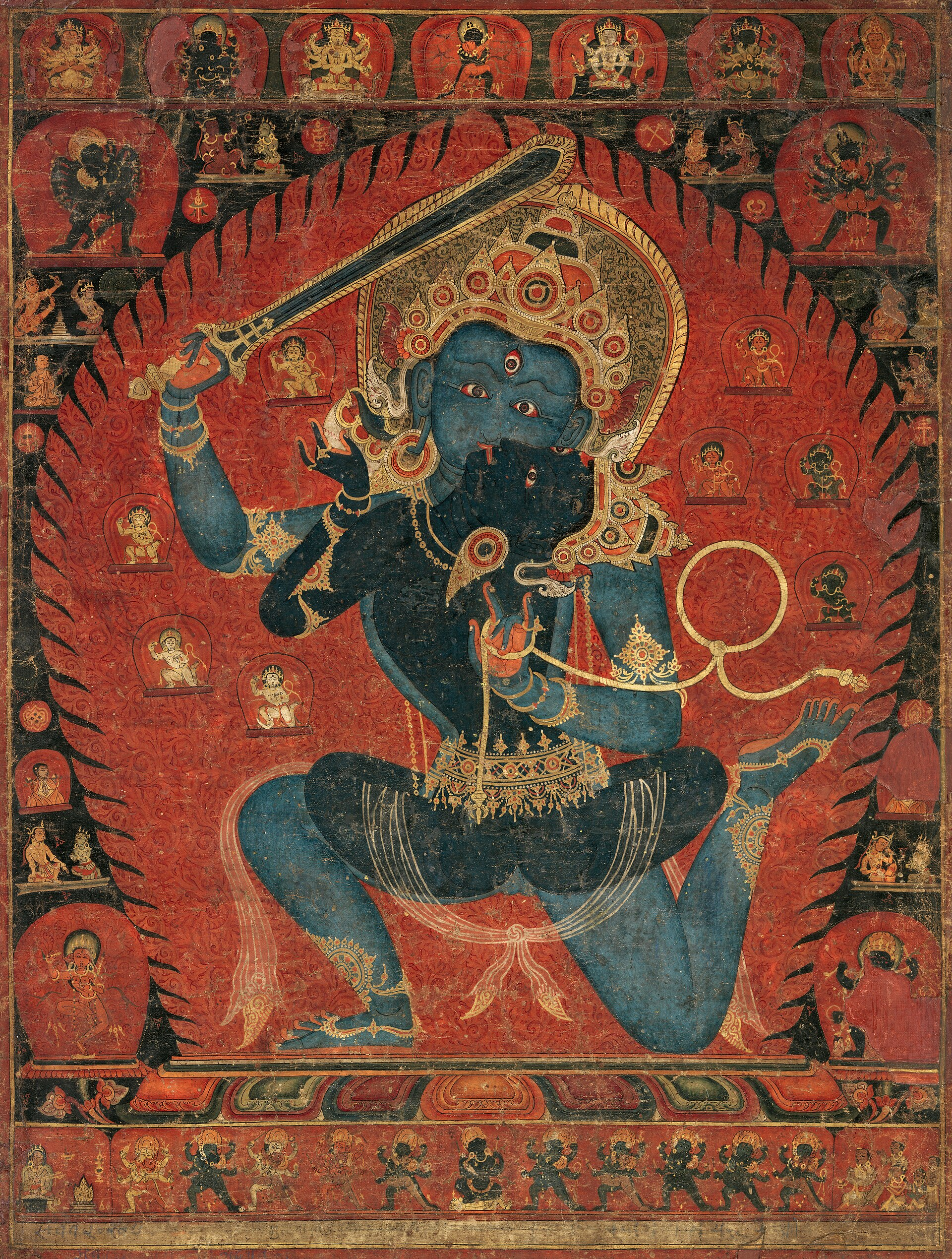
In the modern world, we have a very, very poor understanding of what an orgasm actually is. In the Higher Tantra teachings, it is said that certain experiences can be used as bridges or portals—द्वार (dvāra)—into perceiving consciousness in its pure form—or the divine, if you want to use that term instead. In Higher Tantra, we talk about three experiences specifically that all of us go through throughout life, which are moments where the pure consciousness, or the clear light of pure being, shines forth. These three experiences are falling asleep, dying, and orgasm.
What happens during these three experiences, according to Tantric teachings, is that the five elements—earth (पृथ्वी / pṛthvī), wind (वायु / vāyu), fire (अग्नि / agni), water (आप / āpa), and space (आकाश / ākāśa)—which hold consciousness on the physical plane, begin to dissolve. And in that dissolution, the soul or consciousness is in many ways released from the bonds that tether it to the body and to the physical world.
Many of us have had glimpses of this. Just before falling asleep, we might experience visions, intuitions, or flashes that are not the same as our ordinary thoughts. Or we might feel a sudden falling sensation. All of these are signs of what Tantra calls the dissolution of the five elements—भूत-लय (bhūta-laya).
Dying is another profound moment of this dissolution, and it is why many people on their deathbeds report seeing light or moving through a tunnel toward light. These are sensory manifestations of a spiritual process—the unveiling of the clear light of consciousness—འོད་གསལ་ (’od gsal), as it is called in Tibetan.
What this means is that all of these states—falling asleep, dying, and orgasm—can be used as opportunities to encounter the true self. They can be made into meditations. They can become portals through which we reach enlightenment.
In the Tibetan Tantric tradition, there is a long-standing practice of using the dreaming state to reach this clear light. It is called dream yoga (རྨི་ལམ་རྣལ་འབྱོར་ / rmi lam rnal ‘byor), and it is about realizing pure consciousness through the dream world. There are also very complex traditional practices designed to access this light at the moment of death. These are referred to as thukdam (ཐུགས་དམ་ / thugs dam).
This article is however focused on the third portal: orgasm. I want to explore how we can use the orgasmic state as a meditative experience and as a doorway to enlightenment. I want to examine the mechanisms behind this in a way that is easy to understand, so that anyone can begin to appreciate and apply this knowledge.
Unfortunately, orgasm is very poorly understood in the modern world. Most of us receive basic sex education in school, but this is generally limited to how to use condoms, avoid pregnancy, to prevent sexually transmitted diseases. There is no education about how to cultivate and expand pleasure, or how to explore different orgasmic states.
When I say the word orgasm, most people immediately think of the sharp and short clitoral orgasm (for women) or the ejaculative orgasm (for men). For women, this is generally achieved by stimulating the clitoris; for men, by stimulating the frenulum—the sensitive point between the shaft and the head of the penis.
These kinds of orgasms involve a buildup of tension in the pelvic floor that eventually becomes so overwhelming that the body spasms, releasing that tension in a brief but intense burst. It’s an experience that could be compared to jumping off a cliff—sudden, involuntary, and explosive.
What’s important to note about these kinds of orgasms is that they are involuntary and they are based on tension, not on relaxation.
Another thing that is very interesting to note—and that few of us think about—is that most people actually have a stress response to sexual stimuli. When we become turned on and begin to feel sexual energy moving through the body, our typical response is to activate the sympathetic nervous system, which governs the fight-or-flight reaction. Our heart rate speeds up, we start to tense, and our breath becomes shallow. All of these physical responses are actually signs of stress, not signs of relaxation or true presence.
The root of this lies in the performative relationship most of us have developed toward sexuality. Instead of sexuality being a deeply embodied, enjoyable, and intimate experience, it becomes about achieving something—reaching a particular goal or state. This is largely because our cultural conditioning around sex has been shaped by pornography, media, and constant exposure to digitally refined, idealized bodies. As a result, most of us are deeply insecure about our own bodies and our own sexuality.
Sex becomes about performance, about imitating unrealistic scenarios that are, in truth, illusions—carefully scripted and edited moments designed for visual consumption rather than genuine connection. This mindset creates a stress response. Rather than staying present in the body, we shift our awareness to the mind. We become analytical, concerned about whether we’re doing it “right,” whether our partner is enjoying it, or how we’re being perceived. We become mental.
This leads us to a false understanding of orgasm. On the physical level, what most people call “orgasm” is simply an involuntary buildup of tension—usually in the pelvic floor—until the body can’t contain it any longer, and that energy is released abruptly, like falling off a cliff. On the mental level, orgasm becomes something to perform or achieve, a task on a checklist—something we strive for, both for ourselves and for our partners.
This is why most of us are not present during sex. We are not fully sensing. We are evaluating. We are judging. We are in our heads rather than in our bodies.
Yet the orgasmic energy is deeply profound and much more expansive than we often realize. It has the potential to move through the entire body. This is often referred to as a full-body orgasm, but the mechanism behind this kind of orgasm is very different. It requires a shift—away from mental control and tension, and toward surrender and relaxation.
Instead of responding to sexual arousal by becoming tense and performative, we must learn to let go—both mentally and physically. When we do this, the orgasmic energy, rather than remaining trapped in the pelvic region, can rise through the spine and pervade the entire body. It can flow into our muscles, our joints, our heart space. At the same time, the orgasmic energy moves like an acid through the mind, and melts away mental tension. But for most people, unfortunately, this doesn’t happen, because we hold too much tension in the hips and pelvic floor.
That tension is directly connected to our mental habits of control. When we shift into the evaluating, performative mind, it translates into a physical contraction—especially in the pelvic floor and perineum. These areas are deeply associated with control in the human body. They are the muscular centers we learned to contract when we were small in order to gain control over urination and defecation. They are also the muscles we unconsciously engage when we are bracing ourselves, when we are on edge, when we are “holding it together,” both emotionally and physically.
This is why, in states of judgment and control, we tense the pelvic floor. These same muscles are activated in the body’s fight-or-flight response. So, when we’re trying to “perform” sexually or emotionally, we’re also physically closing off the pathway for energy to flow.
To access the full-body orgasm, then, there are two primary pathways:
Physical Preparation through Yoga. The first is to practice yogic methods that help release the chronic tension held in the pelvic floor and perineum. When these areas soften and open, sexual energy is no longer trapped there. It doesn’t build and explode—it flows. The energy can then circulate throughout the entire body, rejuvenating it rather than being lost through ejaculation. This is the foundational work of many Tantric traditions.
Mental Reorientation toward Sexuality. The second path is psychological and spiritual. It involves changing your mental relationship to sexuality. Instead of seeing it as something to perform or achieve, it becomes a meditative, embodied, and deeply present experience. Sex becomes a way to feel, to sense, to surrender—not to evaluate, impress, attain.
Both of these pathways lead to a simultaneously occurring psychosomatic change. The pelvic floor becomes open, and the mind becomes present. When the pelvic floor opens, sexual energy is no longer forcefully held in the pelvic floor, but allowed to radiate throughout the body. Reflectively, the mind is no longer goal-oriented, but in a state of allowance, or presence. Pleasure is allowed to arise and increase. The un-tensing of the pelvic floor and simultaneous un-tensing of the mind are both expressions of what we can call surrender—or त्याग (tyāga)—the absence of resistance. As such, they are psychosomatic reflections of a spiritual attitude.
Attainment of the full-body orgasm is similar to—or almost an exact reflection of—higher meditative states, such as samādhi (समाधि) and mahāmudrā (ཕྱག་རྒྱ་ཆེན་པོ་ / phyag rgya chen po). In these states, the mind and self are in complete surrender. We no longer grasp at reality or judge the phenomena that arise. The mind is no longer projecting but observing reality as it unfolds. This process of allowance is what we train ourselves into on the meditative path—and the mental transformation that occurs therein is the same that is necessary in order to attain full-body orgasms.
The full-body orgasm is, as we have seen, both a physical and a mental phenomenon. It requires an opening both of a specific area of the body—the pelvic floor—as well as an opening of a specific function of mind—the need to control. What happens in the progress of moving from ejaculative or clitoral orgasms into the full-body orgasm is a process of lessening our need to control and judge. Our ability to feel pleasure is a consequence of the degree to which we are in a relationship of allowance or judgment towards ourselves.
Pleasure requires that we are embodied in the senses, rather than controlling ourselves top-down, from the mind. Developing a good relationship to pleasure is reflective of developing a relationship towards ourselves in which we allow ourselves joy, and is as such a powerful tool for cultivating an inner atmosphere of friendliness, or maitrī (मैत्री), rather than animosity.
In yogic science, one of the third pillars of health is kāma (काम)—pleasure for pleasure’s sake. That means that one of the main things that determines our physical and inner health is whether we allow ourselves to unapologetically enjoy the beauty of life. When we engage with pleasure meditatively, we suspend the judging mind, because true pleasure requires somatic presence. When we truly enjoy something, there is no room for judgment, control, or fear.
Consciously developing a relationship to pleasure is therefore also a way to become less judgmental and controlling of the world around us, through cultivating a friendly relationship of love and allowance internally. People who have mastered the art of kāma, or consciously engaged with pleasure in a meditative way, are always more warm, open, non-judgmental, and allowing of others. This can be verified by looking around: the people around us who know how to enjoy life—and who’ve made it an art—are also less critical of others and more spacious by nature.
The key here, however, is not to develop attachment (राग / rāga). If we become attached to pleasure, we become enslaved to it. We must develop the ability to engage with pleasure while holding it lightly, and remember that our capacity to feel pleasure does not arise from the object itself—but from the awareness with which we engage with it.
Pleasure expands the mind. When we are overcome with pleasure, there is little room for anything else. The experience of pleasure is as such a natural meditation. People who professionally work with wine are good examples of this. Their ability to perceive countless nuances of flavor and richness in a simple sip of wine requires meditative concentration, and demonstrates how the trained, open mind perceives reality in a special way. We can use many kinds of pleasure to engage in this work, such as music, dance, or food. The sexual kind of pleasure, however, has the advantage of being very powerful.
Sexual arousal lights us on fire, and we become one-directed. Everyone knows this. We can be in a bad inner state, but if we get turned on, we become very focused. This is unfortunately also why many people use pornography and masturbation to alleviate themselves of suffering. Watching porn and jerking off awakens the sexual fire, which takes charge of us and thus provides momentary respite from the negative mental patterns that are causing us pain.
This tendency, however, here plays largely to our advantage. We can still use sexual energy as a way to reduce suffering, and at the same time become more spacious and less judgmental in the process. The way we do this is by employing the psychosomatic technology of the full-body orgasm. In that process, we learn to develop a stronger capacity for observance over judgment, and simultaneously catch a glimpse of the pure light of being, once this specific orgasmic state is brought to fruition.
There is herein also a question of partner. The quality of an orgasm is dependent on how safe, seen, and held we feel during sexual activity, which again is a function of the relationship as a whole. The key term here is judgment. The less we feel judged by our partner, and the more we experience that all aspects of ourselves are welcome in the context of the relationship, the easier it is to reach a full-body orgasm. That is because a relationship devoid of judgment does not require us to exert control over ourselves. We can be natural, rather than playing a role.
The way we, as partners, facilitate the space for our partners—and ourselves—to reach this state of consciousness-expanding pleasure is by never judging their perceptions, feelings, or thoughts. There can be room for feedback, adjustments, and nuancing, but never judgment. What judgment means here is making the other person feel morally questioned or punished for their experience. Refraining from doing this is a subtle art, and requires time and patience.
The full-body orgasm is essentially surrendering to the sexual energy and letting it take control of us. The experience itself is deeply opening, and the amount of pleasure we experience is mind-opening—quite literally. What happens during the full-body orgasm—if we practice the method described in this article—is that the body, through opening the pelvic floor, and the nervous system, through shifting from sympathetic to parasympathetic activation, allows for more pleasure.
The sexual pleasure is no longer forcefully held in the pelvic floor and therefore begins to move throughout the body. The mind is not focused on performance and expands through the waves of pleasure felt. The full-body orgasm is different from the local orgasm (clitoral and ejaculatory) in that it does not have a clear starting point or end. If the regular orgasm is falling off a cliff, the full-body orgasm is more akin to letting oneself be moved by waves on the ocean. It feels as intense warmth, or radiance, pulsating throughout the body—specifically along the axis of the spinal column.
The energy tends to build up in the pelvic floor, and then begins to enter the chest area, throat, and lastly the cranium. As the pleasure increases, we must relax the body and the breath more and more, and hence create space for, and surrender to, pleasure.
When we begin to work with the full-body orgasm, that experience in and of itself takes us to continuously new plateaus of pleasure and openness, and we will experience that we regularly have new heights of joy. Moreover, since no sexual energy is lost in the process—as is the case with regular, local ejaculation—it also energizes us tremendously in our everyday lives.
Once we begin to develop proficiency in this technique, we might begin to experience what we examined initially—the dissolution of the five elements. This process is esoteric, and the method by which we can facilitate it through sexual heat requires initiation and training, but we might experience rays of its radiance through the full-body orgasm taken to its peaks.
What begins to occur when we are at this level is that certain physical phenomena begin to occur: the breath becomes barely noticeable, the body temperature drops dramatically, the heart rate lessens, and we feel certain changes in the physical body. The mind becomes radically open, and we catch a glimpse of the clear light of mind—འོད་གསལ་གྱི་སེམས་ (’od gsal gyi sems).
In our courses, we teach a variety of techniques for this. The key to them all is changing how we meet sexual pleasure—both mentally and somatically. We do this through keeping the body and breath in a certain state of flow, and by holding a defined, open attitude by the mind. This process requires training and patience, because we are unlearning one response we have habituated ourselves to for a long time, and learning a new one.
The amount of pleasure we can cultivate by this path, however, and the resulting openness of mind, makes it all worth it. If you are interested in exploring the concrete methods for achieving this, you are more than welcome to enroll in any of our trainings from the fall!
Meditation is both an ancient spiritual path and a modern psychological tool—a bridge between the timeless wisdom of contemplative traditions