
About Course
ABOUT THE TRAINING
Traditional tantra is a scientific spiritual method whereby one brings enlightenment into one’s everyday life. Through tantra, we change our self-perception and how we see the world. We go from being victims of our past to divine creators of reality. In tantra, we learn to dance with spiritual energies, and transform discomfort into power. The tantric process is a gradual spiritualization of the entirety of our being. Our bodies become temples, our speech becomes power, our minds luminous and each and every situation the dance of liberation.
This training is a serious commitment, not a therapeutic program. It is not merely a teaching, but a direct transformation of who you are and how you engage with the world, at the deepest level of your being. This path is suited only to those who are ready to make a serious commitment to spiritual realization, and devote themselves to the service of all life. You will enter a new universe filled with spirits and deities. You will develop a relationship to the great master of the past, and study texts and practices that are thousands of years old. Through this training, your spiritual practice will no longer be individual, but an expression of an ancient, living tradition: a spiritual family of which you will become a member.
The training aims at making you fit to teach traditional tantric practice, and perform rituals for healing yourself and others, purify karmic bondage, destroy hindrances and bless places. More than anything, it seeks to facilitate a direct experience of the nature of reality, which will mature throughout the training, and form the basis for the power we draw upon when conducting ritual. You will learn, quite literally, the practice of magic, or of engaging with the subtler spiritual realities that animate reality.
ABOUT THE TEACHER
The course is taught by ngakpa Henrik Lysøe, initiated into the anuttara-yoga-tantra of Heruka-Chakrasamvara, and lifetime students of the indo-himalayan tantric tradition. Henrik has performed the qualifying retreat of the highest tantric cycle, and trained in the practices of the Six Yogas of Naropa under lama Glenn Mullin. He has studied chöd under various lamas, and has been teaching yogic and tantric sciences for more than 10 years.
STRUCTURE
The education is divided into three yanas, or vehicles of training. Each yana contains physical teaching and group practice, daily practice commitments at-home, and a retreat-practice to be engaged in solitarily at the end of each yana. Each yana also contains an examination of theory and ritual practice. Students will have access to practices, recordings of the classes (if one cannot attend live), ritual manuals and texts online, with resources and quizzes for each week.
The physical classes will take place each Tuesday. Each class will contain a theoretical and a practical segment, in which we will engage in the practices together, time and time again, in order to code them into the nervous system and develop the ritual fluency necessary for tantric practice.
WHO CAN APPLY
This training is not entertainment, but a carefully structured transformative process. If you are NOT a thunderpath-student formally invited to partake in this course, you must submit a formal application outlining:
- a) your previous spiritual experience
- b) your intention for applying to this training
This application should be sent to either contact@thethunderpath.com or themillenialyogi@gmail.com
WHY ATTEND
After this training, students will be certified and empowered to serve their communities and fellow life-forms through ritual. They will also be allowed to teach foundational tantric practices and meditation. Over the course of the training, participants will also receive spiritually empowered mantras, which will be kept secret. No practices can be shared with non-initiates until the completion of the training, upon which participants will receive a certificate of completion.
This training is a full-on immersion in traditional tantra, and is ideal for those who seek actual, historically-backed spiritual transmission that dates back to antiquity, and a collective of spiritual friendship.
WHAT YOU WILL RECEIVE
- A seriously comprehensive, six-month program
- More than 24 live classes
- Recordings of all classes in your possession forever
- Continual personal follow-up by the teacher
- A group of fellow students for support and inspiration
- An online bank of resources such as texts, quizzes, practices and recording to ensure maximum integration.
- A certification in teaching the techniques studied, if you complete the course
- The ability to stabilize attention and awareness, and rest naturally without forcing experience
- A clear, grounded understanding of traditional tantra, free from modern distortion
- Fluency in tantric ritual anatomy, including deity yoga, mantra, mandala, offering, and dissolution
- The capacity to work directly with fear, desire, and emotional intensity without avoidance or collapse
- A lived experience of radical compassion that does not sacrifice clarity or boundaries
- Competence in Chöd practice, both formal and integrated into daily life
- Understanding of tsok as communal mandala and repair of reality
- A disciplined, ethical relationship to sexual energy as a source of power and offering
- Increased confidence in uncontrived conduct, responding to life without contrivance
- Readiness to teach foundational meditation and ritual practices responsibly
- A sustainable personal practice that can continue without dependence on structure or identity
PRICE
NOK 9000 (payable by increments)
DETAILED SCHEDULE
FIRST YĀNA (Months 1–2)
Establishing the Basis and Entering the Tantric Universe
Aim:
To unify body, speech, and mind through deity practice, mantra, and ritual discipline, creating the stable container and state of consciousness necessary for ritual. This yana teaches how to develop the immense power of the human imagination, and transform your self-view, in addition to fluency in ritual structure and meditative stability. Students will here become acquainted with the tantric universe, its technologies, beings, hierarchies and dimensions.
At this part of the training, students will learn the secret keys of samatha, or stabilizing meditation, which builds the necessary concentration for more advanced practices. The first yana will also firmly acquaint students with deity yoga, and lead them to find their specific deity, or guardian spirit, which will follow them throughout the whole training.
Tuesday 18 August
Foundations: What Tantra Is and Why It Exists
Theory
- What Tantra Is
- What Separates Tantra from Other Traditions
- Why Tantra Is Practiced
- The Spiritual Basis of Tantra
Practice
- Stabilizing meditation
- Refuge and Bodhicitta (introductory form)
- Establishing contemplative posture
- Introduction to ritual-anatomy, psychology and the creation of sacred space
Aim:
- Understanding the history of tantra.
- Establishing meditative concentration and an open heart necessary for further practice.
- Understanding ritual in terms of spirituality, psychology and neurology
Tuesday 25 August
Lineage and Transmission
Theory
- Tantric History
- Padmasambhava and Yeshe Tsogyal
- Milarepa
- Machik Labdron
- Emptiness
Practice
- Seven-limbed prayer
- Emptiness mantra and meditation
- Niguma’s AH-purification
- Lineage invocation
- Establishing devotional orientation
Aim:
- Meeting the key figures of tantric history
- Understanding the importance of the feminine element in tantra
- Creating a link with the past in tantric practice
Tuesday 1 September
Polarity, Energy, and Symbolic Language
Theory
- Male and Female Principles in Tantra
- The Trinity of Love, Wisdom, and Power
- Manjushri, Vajrapani and Avalokiteshvara
- Tantra as Energetic Cosmology
Practice
- Entering the mandalas of Manjushri, Vajrapani and Avalokiteshvara
- Mantras of the three deities
- Silent resting after visualization
Aim:
- Understanding polarity in tantra
- Understadning kriya-tantra
- Meeting the energies of the three key tantric deities
Tuesday 8 September
Tantric Media: Deity, Mandala, Mantra
Theory
- Deities: Function and Ontology
- Mandalas: Structure and Purpose
- Mantras: Sound, Meaning, Power
Practice
- Further deepening of the three lords’ mandalas
- Dream-yogic practice for finding one’s guardian spirit
- Mantra recitation as energy-projection
- Deity-yoga seen as the creation of your own universe, and the conscious coding of your auric field
Aim:
- Understanding what deities are
- Understanding what a mandala actually is
- Learning to use a mandala to begin to alter your energy and perception of yourself and the world
- Beginning to find you spiritual family and guardian deity
Tuesday 15 September
The Three Trinities of Tantra
Theory
- Body, Speech, and Mind
- Samadhi, Mantra, and Mudra
- Integration of the Three Trinities
Practice
- Coordinating posture, breath, sound
- Introductory mudra use
- Short integrated practice session
- The outer offering mudras
- The mudras of giving, fearlessness, negativity-destruction, and unity
Aim:
- Move from conceptual understanding to coordinated embodiment.
- Increasing spiritual power by combining samadhi, mantra and mudra
- Understanding mudra as neurological anchoring, uniting mind and body
Tuesday 22 September
Ritual Anatomy I — Preparation and Invocation
Theory
- The Ritual Anatomy of Tantra
- Why Ritual Is Structured
- Ritual as an externalization of the full potential of the human mind
Practice
- Full preparation sequence:
- Samatha
- Elective purification
- Calling the lineage
- Refuge and Bodhicitta
- Seven-limbed prayer
- Emptiness
- Protection boundary (vajra-sphere)
- Mandala-building
- Mantra projection
- Dissolution
- Dedication
- Invocation principles
Aim:
- Teach ritual as precise technology, not improvisation.
- Understanding how ritual is psychologically transforming
- Developing ritual fluency
Tuesday 29 September
Ritual Anatomy II — Generation, Offering, and Mantra
Theory
- Self-generation and Front-generation
- Mantric Energy and Transmission
- Mala etiquette, rhythm, breath
- Tara, the goddess of enlightened activity
- Vajrasattva, the Buddha of Purity
Practice
- Tara-sadhana
- Vajrasattva-sadhana
- Establishing mandala space
- Outer offerings with mudra
- Inner and secret offering
Aim:
- Give students functional ritual literacy.
- Mastering the full tantric ritual-structure
- Mastering all foundational practices
Tuesday 6 October
Dissolution, Dedication, and Retreat Orientation
Theory
- Deity yoga as an expression of the foundational movement of life
- Resting Without Fabrication
- The importance of continually purifying your view
- Choosing a Deity and Mandala for Retreat
Practice
- Mandala dissolution
- Deity dissolving into clear presence
- Silent resting
- Merit dedication and aspiration prayers
Aim:
- Close the first cycle and prepare students for solitary retreat, where one kriya-yoga deity and its mandala will be stabilized and mastered.
Retreat on your chosen deity (October 9th-11th)
The retreat that culminates the first yana aims at mastering the practice of your chosen deity. This retreat will give you mantric power connected to the deity in question, which will form the basis of the more advanced energy work. This retreat moreover aims at creating a shift in your identity – or sense of self – through which your enlightened mind is awakened.
Outcome of the First Yana
By the end of this cycle, students will:
- Understand what tantra is and is not
- Be literate in traditional ritual anatomy
- Have direct experience of mantra, mandala, and deity
- Be prepared to enter solitary retreat with clarity and discipline
- Have chosen a specific deity–mandala complex for focused mastery
- Be able to conduct and improvise their own tantric sadhanas
- Teach foundational practices of meditation and purification
SECOND YĀNA – RESTING IN OUR TRUE NATURE
In the second yana, or vehicle of the training, students will develop a profound understanding of the mechanisms of tantric ritual, and learn how to use ritual implements in combination with mudras, mantras and samadhi. Additionally, we will engage with practices whereby our compassion for ourselves and others deepens, along with our ability to forgive and let go, both internally and externally.
We will moreover strengthen our ability to sit with non-judgmental presence through the powerful practice of trekchö, or cutting through illusions. At the end of the second yana, participants will conduct a clear-light retreat, wherein they will develop a deep sense of intimacy with their true nature, an experience of pure consciousness that is so deep that it will radically alter their perception of themselves.
Tuesday 13 October
Theory
- The bodhisattva-ideal
- Radical compassion
- Self-compassion and forgiveness
- The six weapons of the spiritual warrior (the paramittas)
- Fear, Attachment, and Resistance as Teachers
- Blessing with mantra
Practice
- Tong-len
- Forgiveness-meditations
- Purifying and blessing substances
Aim:
- Establishing how one can expand the heart without being hurt, used or broken
- Learning how to combine mudra, mantra and samadhi to bless and consecrate places and objects
Tuesday 20 October
Theory
- The Five Buddhas, Five Dakinis, Five Poisons and Five Wisdoms
- The Five Elements as Mandala of Emotional Transformation
- Dissolving Conceptual and Emotional Tension through the Five-Fold Mandala of Enlightenment
Practice
- Trekchö on Negative Emotions (Transforming Poison into Freedom)
- Self-Initiation Ritual
Aim:
- Establish an understanding of the mechanics and method of tantric transformation
- Learning how to use negative mind-states as a basis of meditation
Tuesday 27 October
Working with Spirits
Theory
- Spirits in tantra
- The Six Realms of Reality
- Types of Spiritual Beings (nagas, ghosts, karmic creditors, ancestors, deities, demons)
Practice
- Tsok-offering to spirits
- Blessing substances
- Summoning beings with equanimity
- Dissolving into Clear Light
- Purifying a place through Bodhicitta-offering (Chenrezig that Liberates the Six Realms)
Aim:
- Deepening one’s understanding of the tantric universe
- Increasing ritual toolkit proficiency
- Learning how to purify a place and dissolve karmic debt
Tuesday 3 November
The ritual toolkit and its outer, inner and secret meanings
Theory
- The altar
- The offering bowls
- The tormas
- The vajra, bell and kila
- The skull-cup
- The drum
- The tripod
Practice
- Torma offerings
- Using the vajra and bell
- Playing the drum
- Using the kila
Aim:
- To connect the ritual toolkit with their correspondences on the inner plane, thereby making them agents of spiritual power, rather than dead objects.
- Learning how ritual actions expand consciousness
- Introducing the elements and intention of the tsok-ritual
Tuesday 10 November
Ritual fluency – learning to unite samadhi, mantra and mudra for generating power
Practice
- Sadhana utilizing all theory and practice, including ritual implements and the tsok offering
- Communal tsok
Aim:
- Rehearsing tantric ritual as a group
Tuesday 17 November
The Four Faces of Compassion and Four Enlightened Activities
Theory
- The Fours Faces of Compassion
- The Four Enlightened Activities
- The Four Mantric Energies, and when to use them
Practice
- Tsok-rituals for the Four Enlightened Activities
Aim:
- Developing deeper complexity in ritual, and learn how to use ritual, mantra and mandalas for healing, abundance, attraction, protection and destruction
Tuesday 24 November – 1 December
Focus-period: The Nature of Mind, Clear Light, and Trekchö
Theory
- Clear Light as Ground, Path, and Fruition
Awareness beyond subject and object is the ground of experience, the path of practice, and the fruition of realization. - Awareness Beyond Subject and Object
Knowing awareness is immediate, non-dual, and self-luminous, distinct from the conceptual mind. - Conceptual Mind vs. Knowing Awareness
Conceptual mind operates through effort, interpretation, and correction; knowing awareness does not require modification. - Trekchö as Radical Simplicity
Trekchö cuts directly through fabrication rather than refining experience. - Cutting Through Effort and Correction
This includes effort to stabilize, improve, or maintain a particular state. - Difference Between Effortlessness and Collapse
Effortlessness is vivid and present; collapse is dull, dissociated, or inattentive. - Clear Light as Recognition, Not Production
Clear light awareness is recognized rather than created, allowing experience to self-liberate.
Practice
- Guided Recognition Practice
Direct introduction to clear light awareness, emphasizing recognition rather than concentration. - Trekchö-Style Resting
Resting without correction, adjustment, or control. - Short Resting Sessions (Repeated)
Frequent brief sessions to re-recognize awareness again and again. - Micro-Recognitions During Sitting
Short moments of recognition woven throughout the session. - Wordless Dedication
Closing the session without conceptual framing, allowing intention to dissolve into awareness.
Aim
- Establish direct familiarity with clear light awareness.
- Allow experience to self-liberate without interference.
- Building an unshakable anchor in clear light awareness necessary for the full-blown ritual practices of the third yana
Second retreat – resting in your true nature (december 4th-6th)
The second retreat can, if desired, be done with another student.
This is a retreat in which you will rehearse to continuously rest in pure awareness, and practice “uncontrived conduct”, or living without any restrictions or limitations. This retreat is a long practice of being natural – of not trying to change yourself or reality, or of becoming unshakably comfortable with yourself, in each moment, exactly as you are. This is a long and deep retreat on full, unconditional acceptance.
The main practice of this retreat is the trekchö-meditation, and a daily tsok-practice, as taught in class. Detailed instructions on how to conduct this retreat will be given in class.
THIRD YĀNA – BECOMING A SKY-DANCER
The traditional title of a tantric practitioner is a daka or a dakini – depending on gender. This word is composed of the Sanskrit words “da”, meaning “sky” or “space”, and “ka”/”kini”, meaning “to move”. A daka or a dakini is one who dances in space, or moves through the sky. This refers to having a direct experience of emptiness, or the interconnected nature or reality, but rather than retreating from everyday life, with all its ups and downs, to dance through it with fearlessness and joy.
At the final stage of the practice, students will merge the insights of the entire process into a final act of fearlessness in the qualifying retreat. Up until that final point of transformation, we will rehearse the rituals together as a group, until they become as natural to you as brushing your teeth.
The overall aim of the final yana is therefore the complete unity of the spiritual and the everyday, “ordinary” reality, qualifying you as a true tantric practitioner – or sky-dancer.
Overall Dates
Tuesday 8 December – Tuesday 9 February
No classes:
- Tuesday 22 December (Christmas break)
- Tuesday 29 December (Christmas break)
Tuesday 8 December
Theory
- What “completion” means in Vajrayāna
- Uniting samsara and nirvana
- Why Chöd and Tsok culminate the path
Practice
- Chöd
- Silent sitting after offering
Aim
- Learning the full chöd-ritual
Tuesday 15 December
Chöd as Continuous Ego-Cutting
Theory
- The history of chöd, and the lineage of Machik Labdrön.
Practice
- Chöd
Aim
- Learning the full chöd-ritual
Christmas Integration Period
Tuesday 22 December – no class
Tuesday 29 December – no class
Assigned Individual Practice
- Daily chöd
Tuesday 5 January
Tsok: Repairing Reality
Theory
- Tsok as repair of samaya
- Inclusion of pure and impure
- Community as mandala
Practice
- Full tsok ritual
- Confession, offering, dedication
Aim
- Learning the full tsok-ritual
Tuesday 12 January
Polarity and Sexual Energy in Tantra
Theory
- Male and female principles at the completion stage
- Sexual energy as creative and destructive force
- Vow, secrecy, and non-exploitation
- Tsok as uniting male-female energies
Practice
- Internal polarity meditation
- Channeling sexual energy without discharge
- Tsok with uniting of drops
Aim
- Teach students how they can use sexual energy as a power-source in tantric practice
Tuesday 19 January
Sexuality as Offering
Theory
- Desire as sacrificial substance
- Union without possession
- Sexuality without appropriation
Practice
- Solo sexual-energy offering practice
- Chöd applied to desire and fantasy
Aim
Cut self-centered desire at its root.
Tuesday 26 January – Tuesday 9th of February
Final preparations for the final stage of practice
This period of the training will be devoted exclusively to ritual practice and rehearsal, and no new content will be given at this stage. This is in order to help all students fully integrate the practices, and prepare for the qualifying retreat at the end of the entire program.
Final Solitary Retreat: 11-13th of February
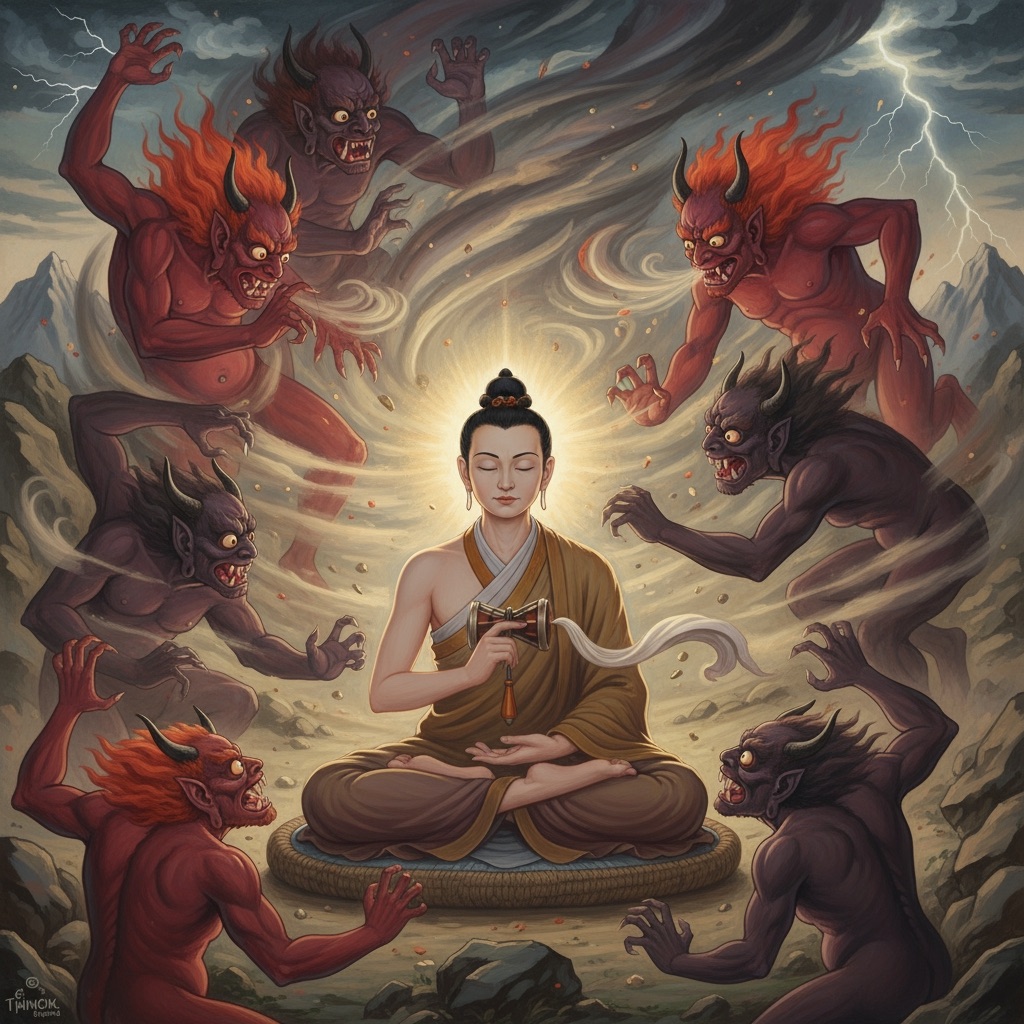
Chöd-retreat – conquering fear and dissolving your demons.
At this retreat, students will seek out their fears and conquer them through their mastery of chöd. This retreat is the final test of the presence, love and spiritual power developed throughout the training. When students complete this retreat, they have gained full mastery over their mental poisons, and are fit both to teach, and conduct rituals, for others.
Details on this retreat will be given in the preparatory final period, and each student will have the retreat tailored to them. The structure of this retreat will in other words be developed in cooperation between the teacher and students and a group.
Student Ratings & Reviews