The divergence between traditional accounts of demons and modern psychological explanations often appears stark. Where Christianity, Buddhism, Hinduism, or shamanic traditions speak of hostile beings, unseen forces, or karmic afflictions, psychiatry tends to speak of neurotransmitters, trauma histories, and diagnostic categories. From a scientific perspective, demons are mythological projections of internal states, useful perhaps as metaphor but not to be taken literally. Yet this dismissal risks overlooking the existential and therapeutic power of these older frameworks. For those who believe themselves possessed, the demon is not a symbol but an immediate and lived reality. The ritual of exorcism, in such contexts, can effect genuine psychological relief—not because a literal spirit has departed, but because the sufferer and their community have enacted a powerful narrative of liberation. Goodman (1988) notes that in Pentecostal churches today, exorcism continues to produce healing outcomes, not by aligning with biomedical categories, but by working within a symbolic system where demons are real.
At the same time, psychology has offered compelling naturalistic accounts of why such experiences occur. Dissociative identity disorder, schizophrenia, epilepsy, or trauma-related intrusions can all give rise to sensations of possession or attack. The scientific method emphasizes causal mechanisms and seeks interventions—pharmacological or psychotherapeutic—that target the underlying pathology. Within this paradigm, demons are unnecessary explanatory constructs. Yet psychiatry’s emphasis on biology has sometimes been criticized as reductive, neglecting the lived meaning of distress. Kirmayer (2004) argues that mental health must be understood not only as neurochemistry but as “culturally mediated forms of suffering,” where symbolic frameworks—such as demonology—help sufferers to articulate otherwise ineffable states.
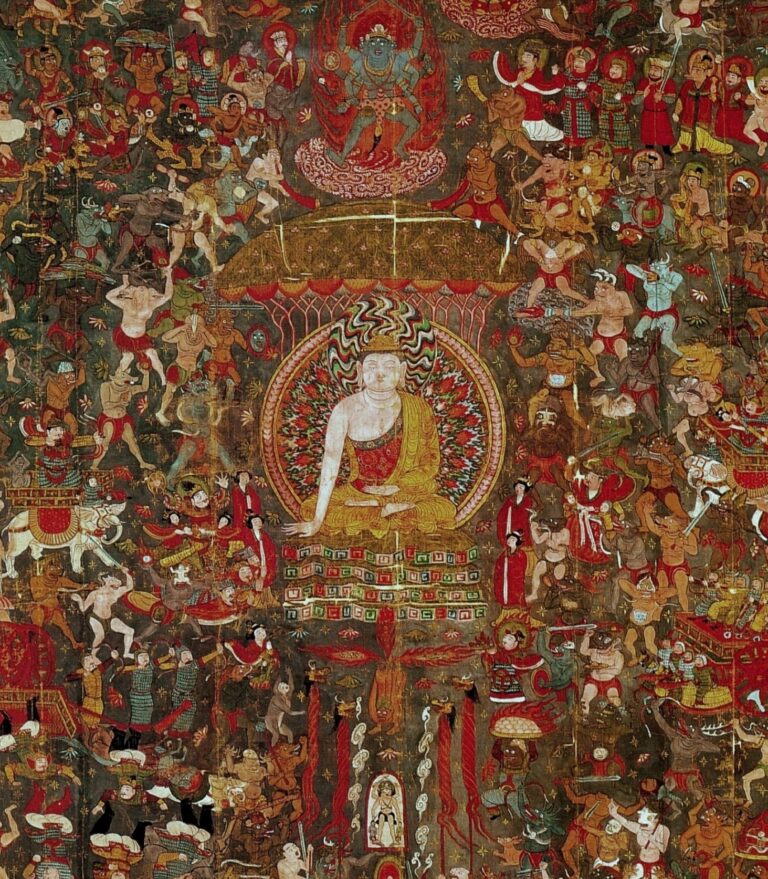
Rather than asking which framework is “true,” it may be more productive to recognize that both can be true in different registers. Demons may not exist as ontological beings in the material world, but they do exist as phenomenological realities in the minds and cultures of those who experience them. The man tormented by voices that tell him to self-harm is, in one sense, suffering from psychosis; in another sense, he is under attack by a demon. Both statements describe the same lived experience from different vantage points. The Buddhist concept of Māra illustrates this duality: Māra is both a mythic being and a metaphor for inner affliction. To say “Māra tempted me” is not false, even if one also explains the experience in terms of intrusive negative thoughts.
The question of which framework is best therefore depends on context. For some, the biomedical model provides effective treatment through medication and therapy; for others, the symbolic power of demonological language and ritual offers relief that pills alone cannot. In many cases, integration is possible. Anthropological studies have shown that patients in non-Western societies may benefit most when biomedical interventions are combined with culturally resonant rituals (Eliade, 1964; Kirmayer, 2004). Even in the West, narrative therapy’s externalization of problems closely resembles demonological logic, casting depression or addiction as an external agent that can be resisted and overcome (White & Epston, 1990). What modern psychology has rediscovered, often in secular form, is the therapeutic power of metaphor, ritual, and community that traditional demonologies never abandoned.
Thus, the opposition between demons and diagnoses is less a matter of truth and falsehood than of perspective and utility. The language of demons speaks to the existential and spiritual dimensions of suffering, while the language of psychology addresses its biological and cognitive mechanisms. Each reveals aspects that the other neglects. Taken together, they offer a more complete account: one that acknowledges both the material substrates of illness and the symbolic worlds through which human beings experience and make sense of their pain.